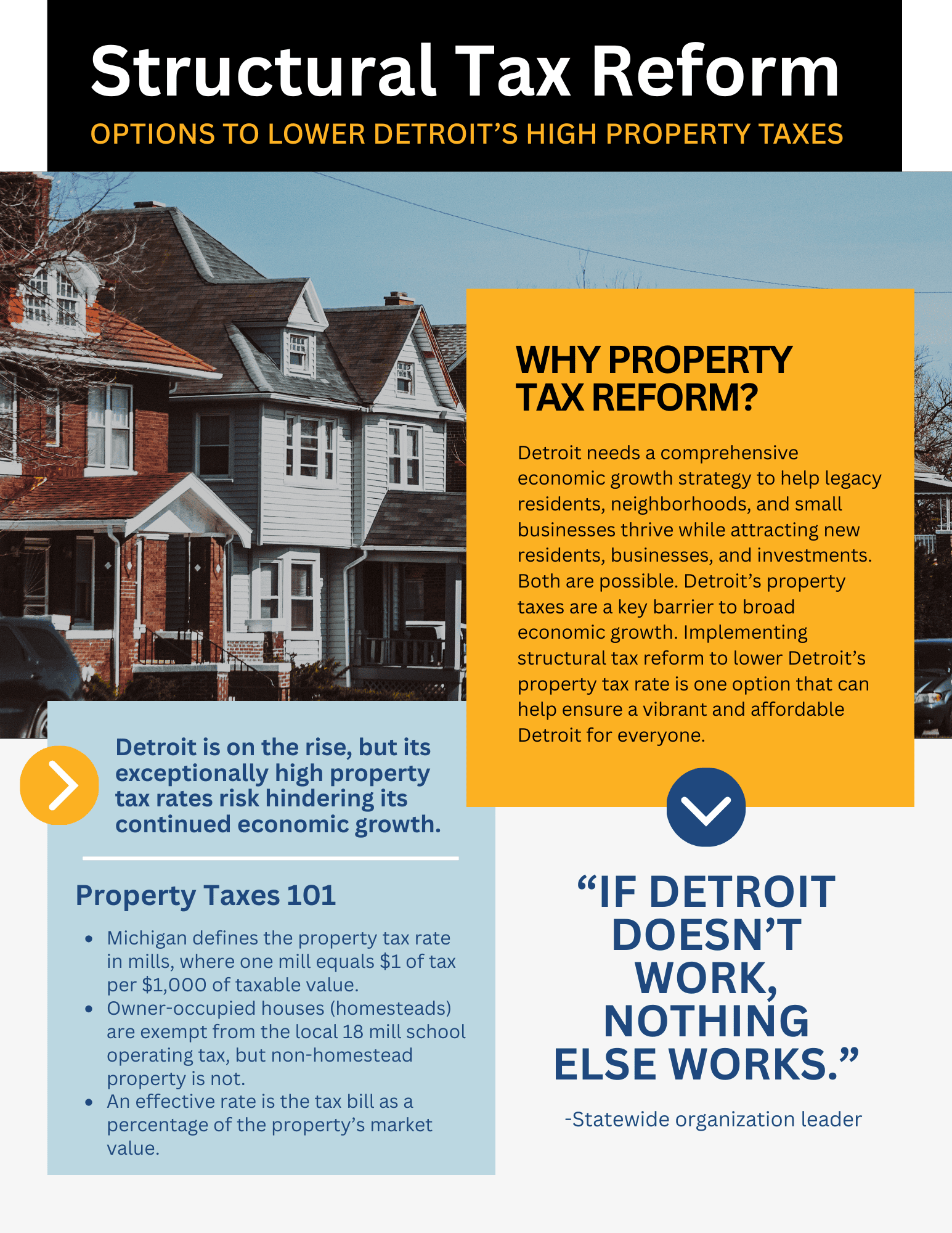
Detroit is on the rise, but its exceptionally high property tax rates risk hindering its continued economic growth.
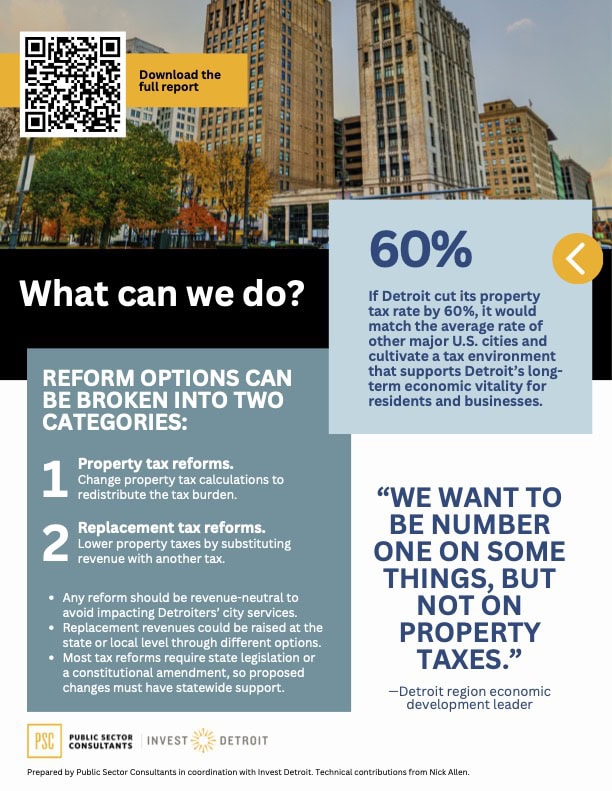
Detroit needs a comprehensive economic growth strategy to help legacy residents, neighborhoods, and small businesses thrive while attracting new residents, businesses, and investments. Both are possible. Detroit’s property taxes are a key barrier to broad economic growth. Implementing structural tax reform to lower Detroit’s property tax rate is one option that can help ensure a vibrant and affordable Detroit for everyone.
Executive Summary
Download Full Analysis
This content is made possible by in-depth research and analysis conducted by PSC. Please consider providing some additional information to download this content so we can let you know about other relevant research we’re conducting. We will never share your information with other organizations.
Report Findings
Property Taxes 101
Michigan defines the property tax rate in mills, where one mill equals $1 of tax per $1,000 of taxable value.
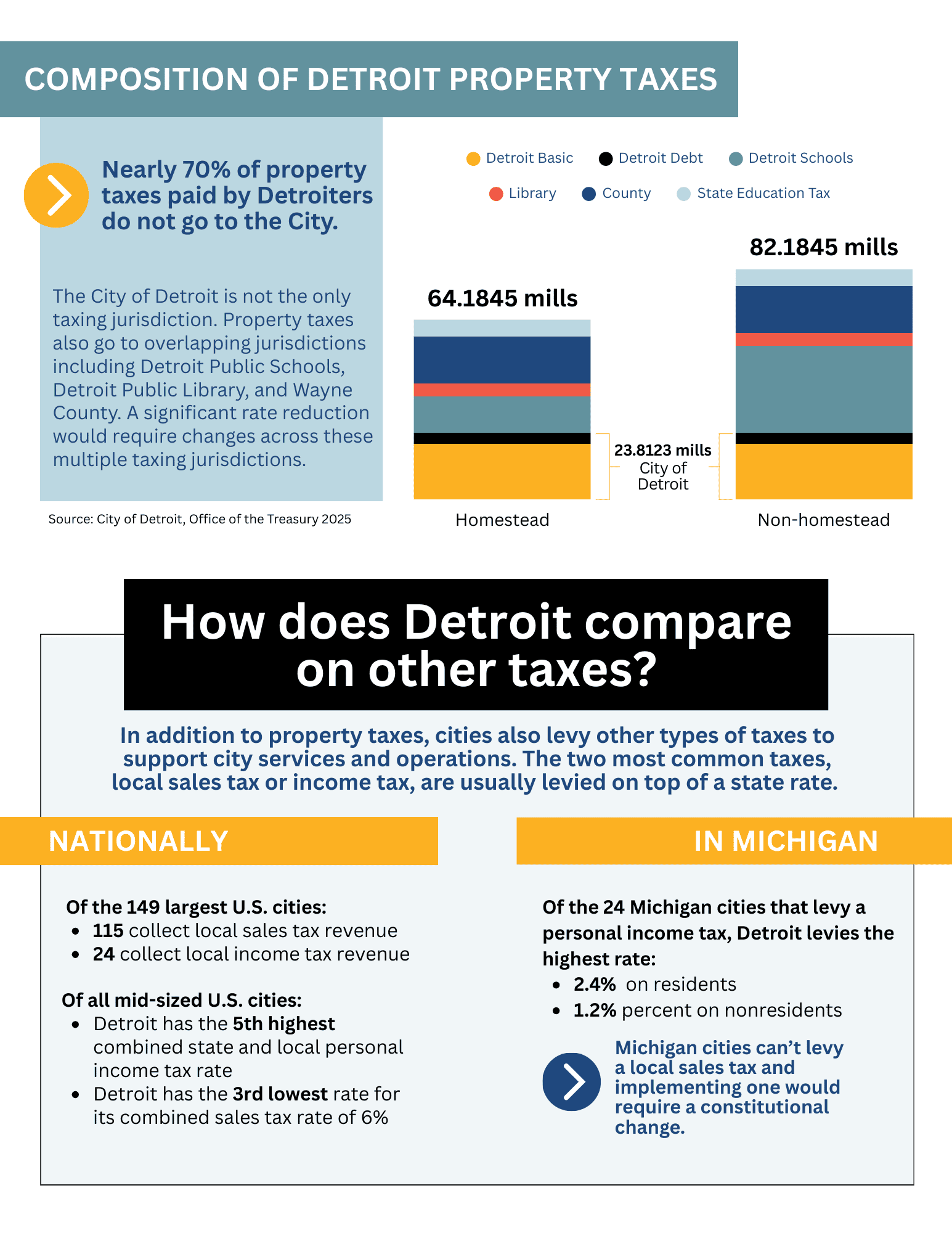
Owner-occupied houses (homesteads) are exempt from the local 18 mill school operating tax, but non-homestead property is not.
An effective rate is the tax bill as a percentage of the property’s market value.
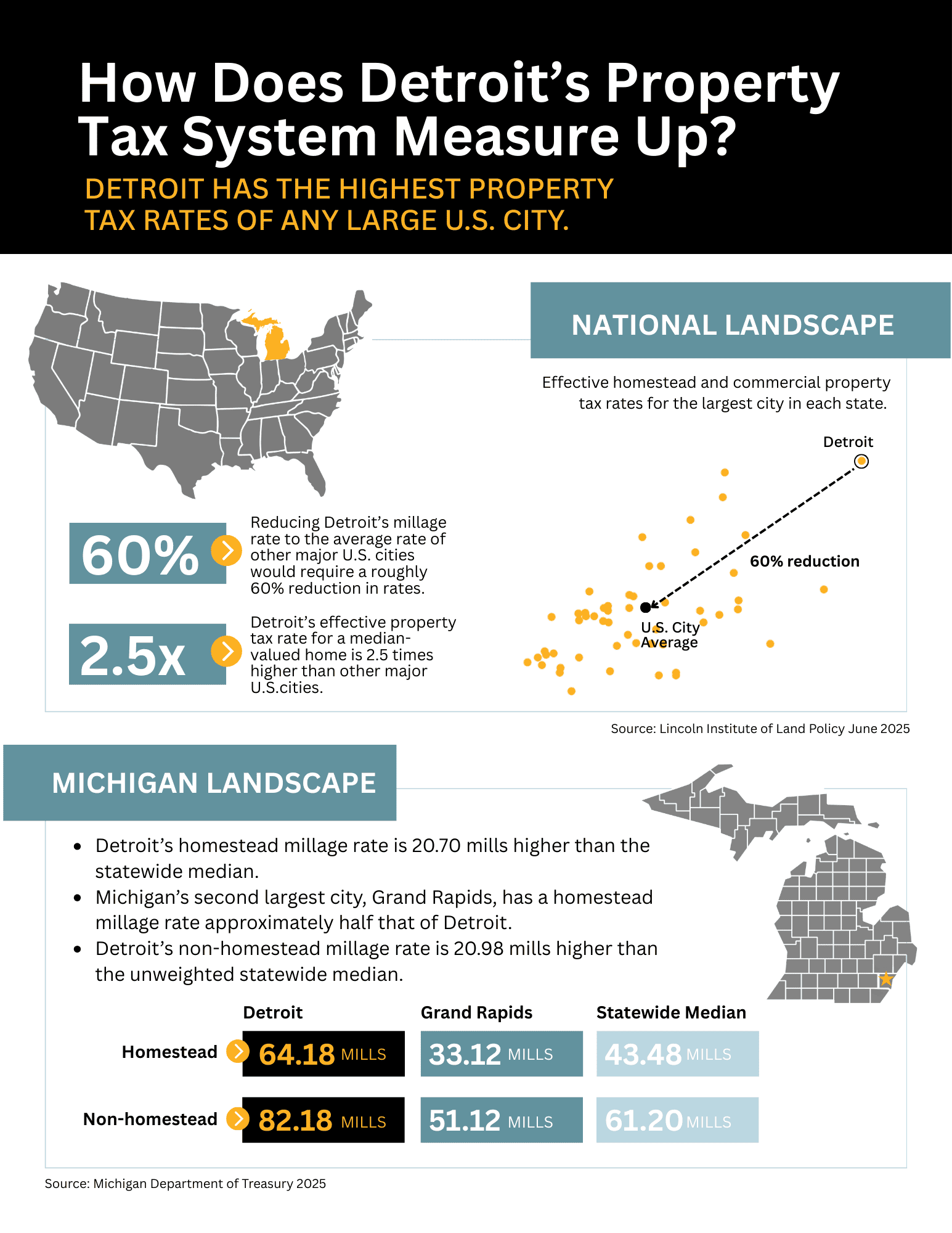
When comparing Detroit’s property tax rate to that of other major U.S. cities, we see that:
Detroit’s effective property tax rate for a median-valued home is 2.5 times higher (3.02% vs. 1.22%).
Detroit has the highest effective tax rate for apartments and commercial properties.